
City Retirement Guide
Retire in Bordeaux, France
The world's wine capital on the Garonne: grand 18th-century architecture, oceanic mildness, and a 2-hour TGV to Paris
What are the key facts about retiring in Bordeaux?
- Elevation & setting
- Near sea level (~6-24 m) on the Garonne, ~25 km inland from the Gironde estuary
- Annual temperature
- Temperate oceanic; ~14 C annual mean, warm summers, cool damp winters (~7 C January)
- Nearest international airport
- Bordeaux-Merignac (BOD), ~12 km west of the city center
- Nearest major hospital
- CHU de Bordeaux (Pellegrin, Haut-Leveque, Saint-Andre sites)
- Primary retirement visa (2026)
- France VLS-TS Visiteur: no fixed minimum, ~EUR 1,400/mo SMIC-linked means test + private health cover
- Language environment
- French official; less English spoken than Paris or the Riviera, so basic French matters
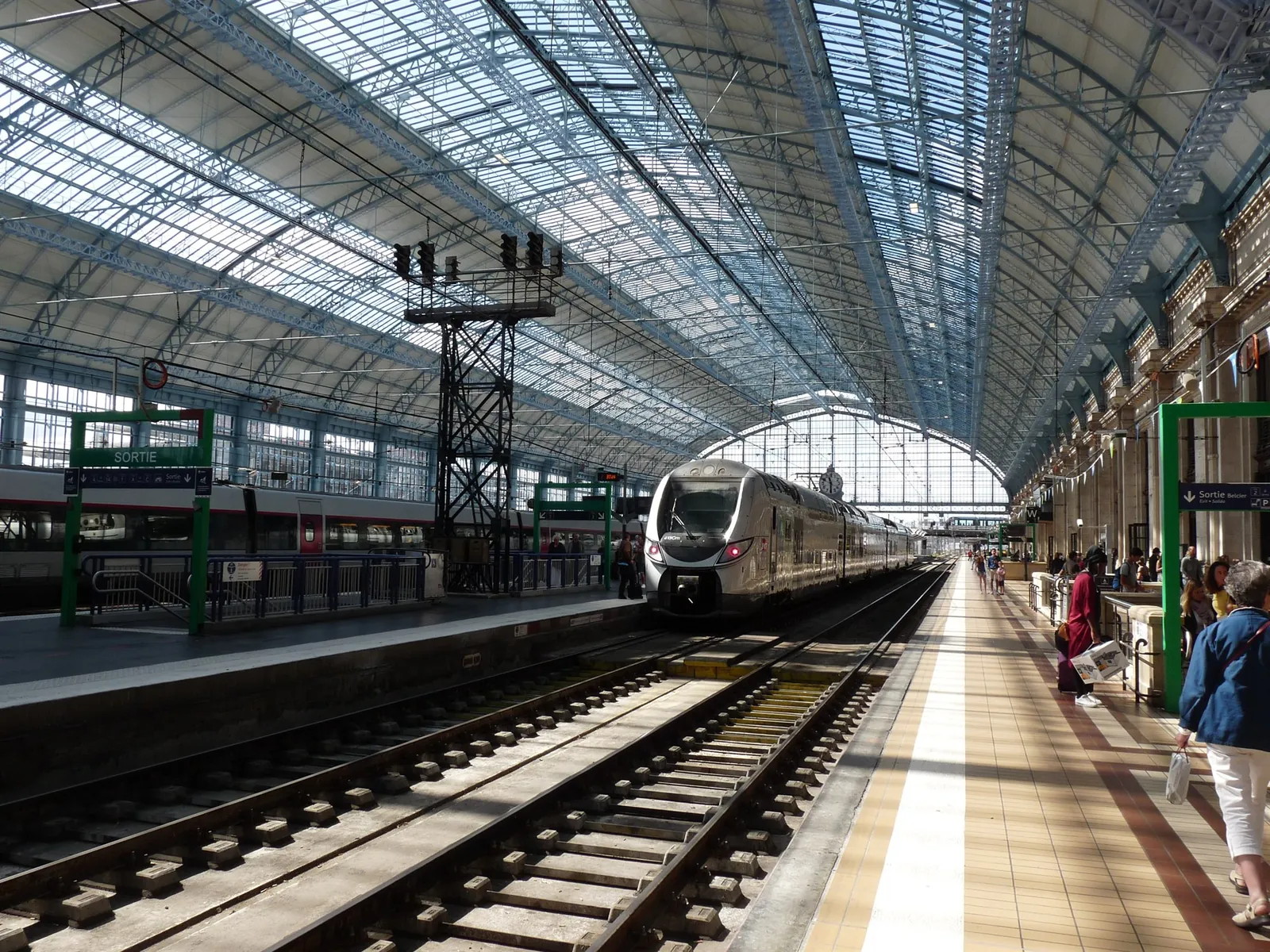
Bordeaux's 2017 LGV high-speed line put Paris Montparnasse just over two hours away, giving retirees big-city specialist access and family connections without capital-city living costs.
What is retirement like in Bordeaux?
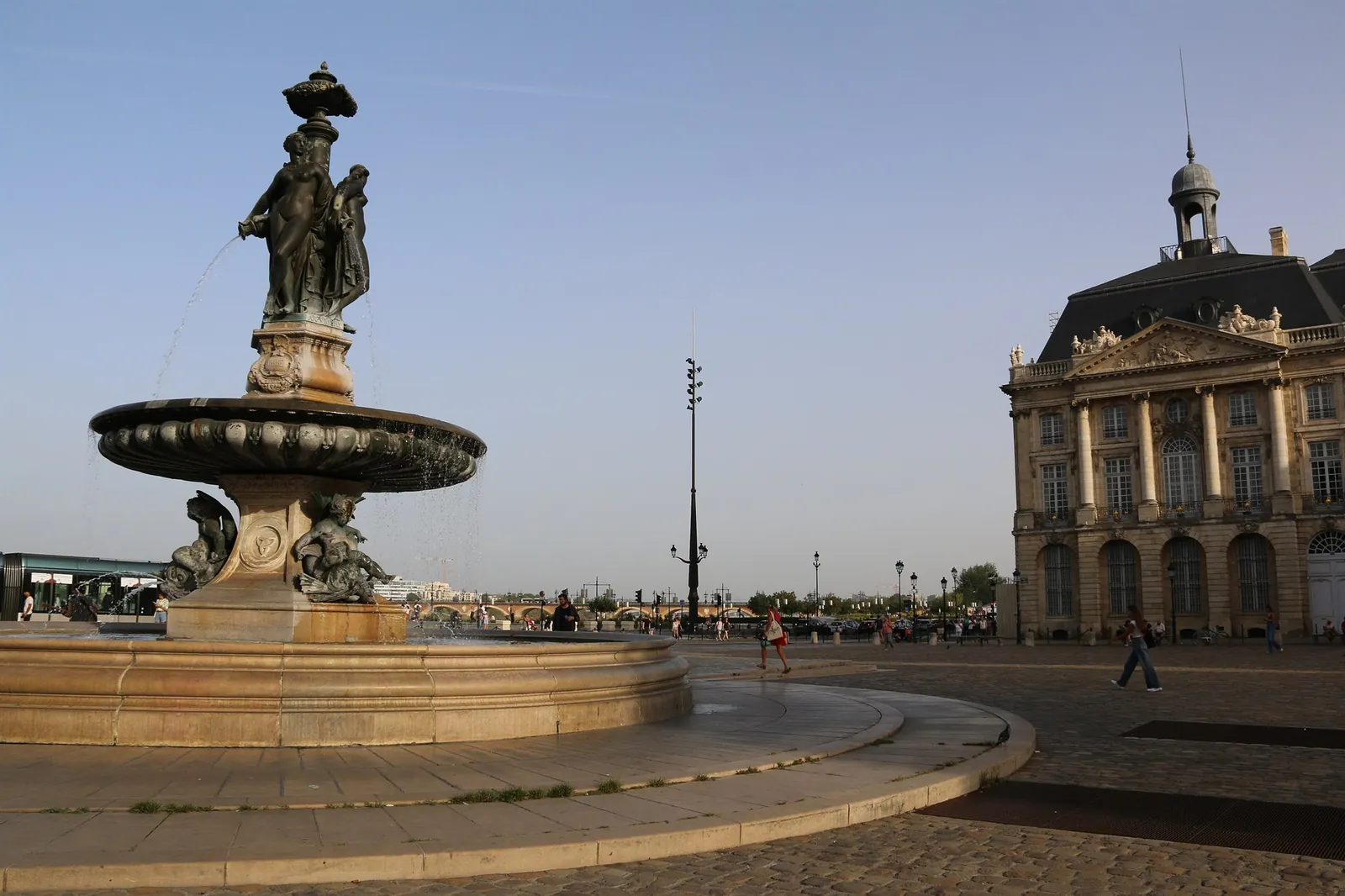
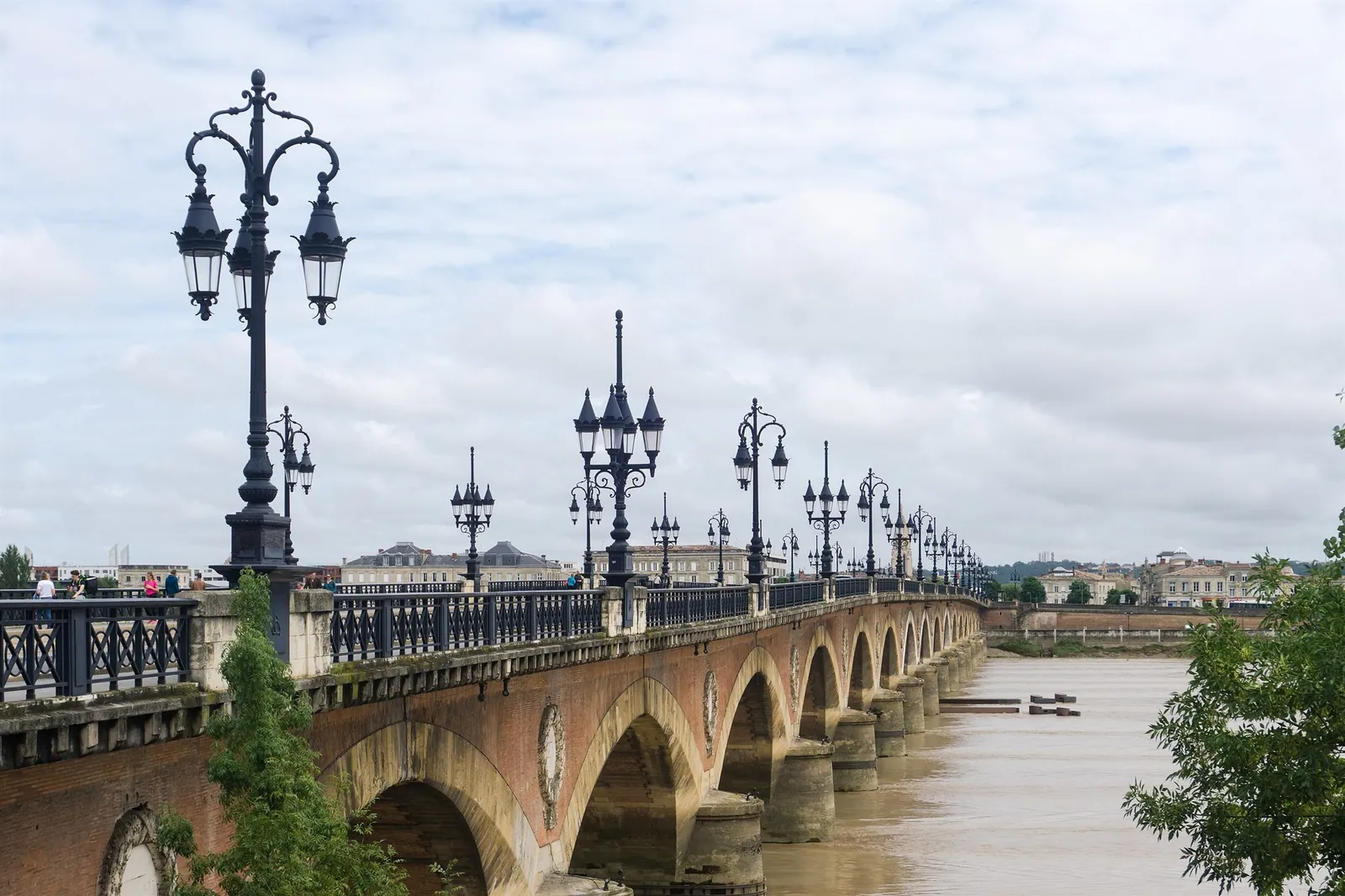
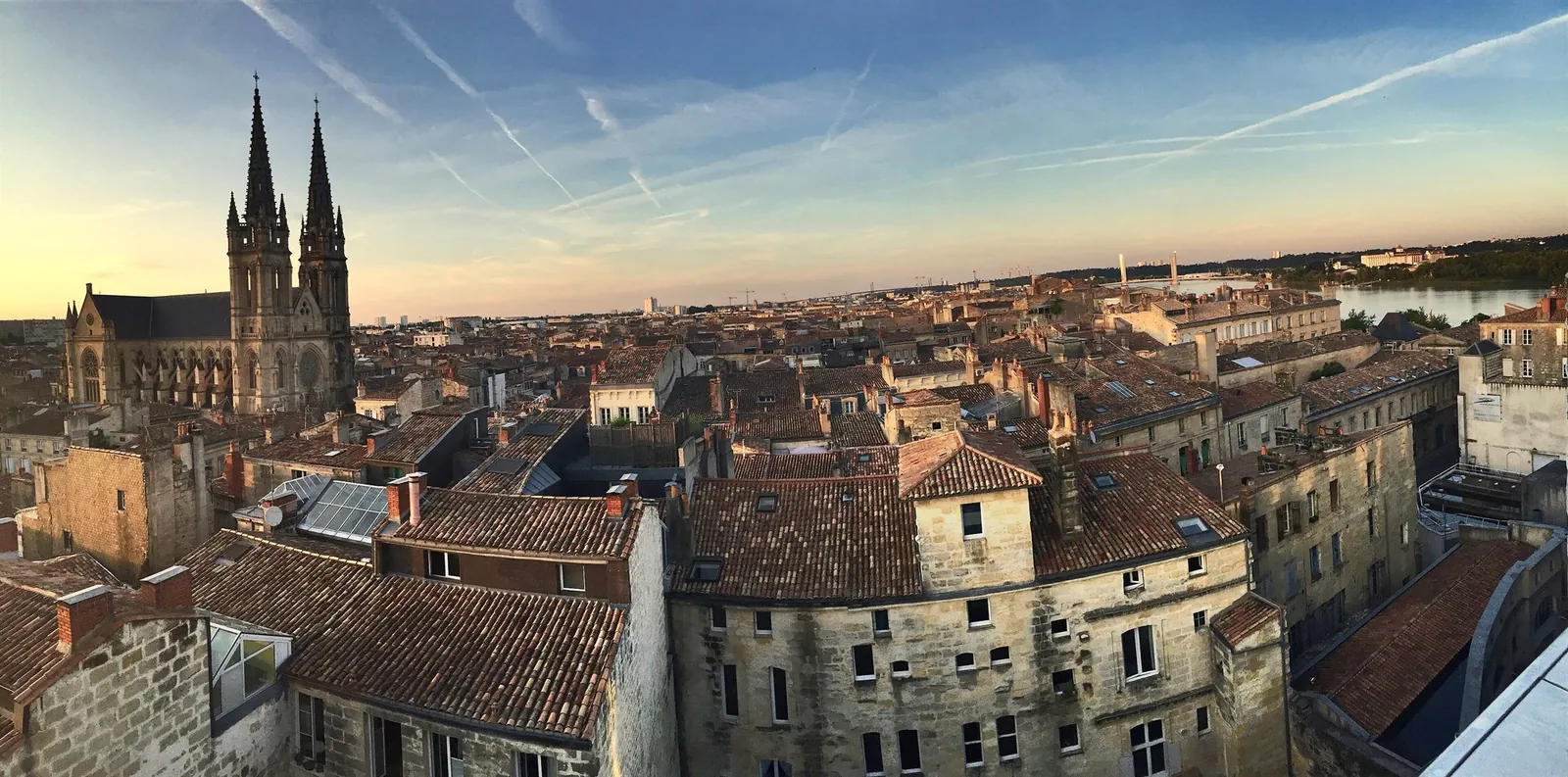
Bordeaux sits on a broad bend of the Garonne River about 25 kilometers inland from the Gironde estuary in southwest France, its 18th-century limestone quays curving so gracefully that UNESCO listed the historic center as the 'Port of the Moon' (Port de la Lune). The city is the capital of the Nouvelle-Aquitaine region and the commercial heart of the world's most famous wine country, ringed by the Médoc, Saint-Émilion, Pomerol, and Sauternes appellations. CHU de Bordeaux anchors regional healthcare across the Pellegrin, Haut-Lévêque, and Saint-André hospital sites, and Bordeaux–Mérignac Airport (BOD) lies about 12 kilometers west of the center.
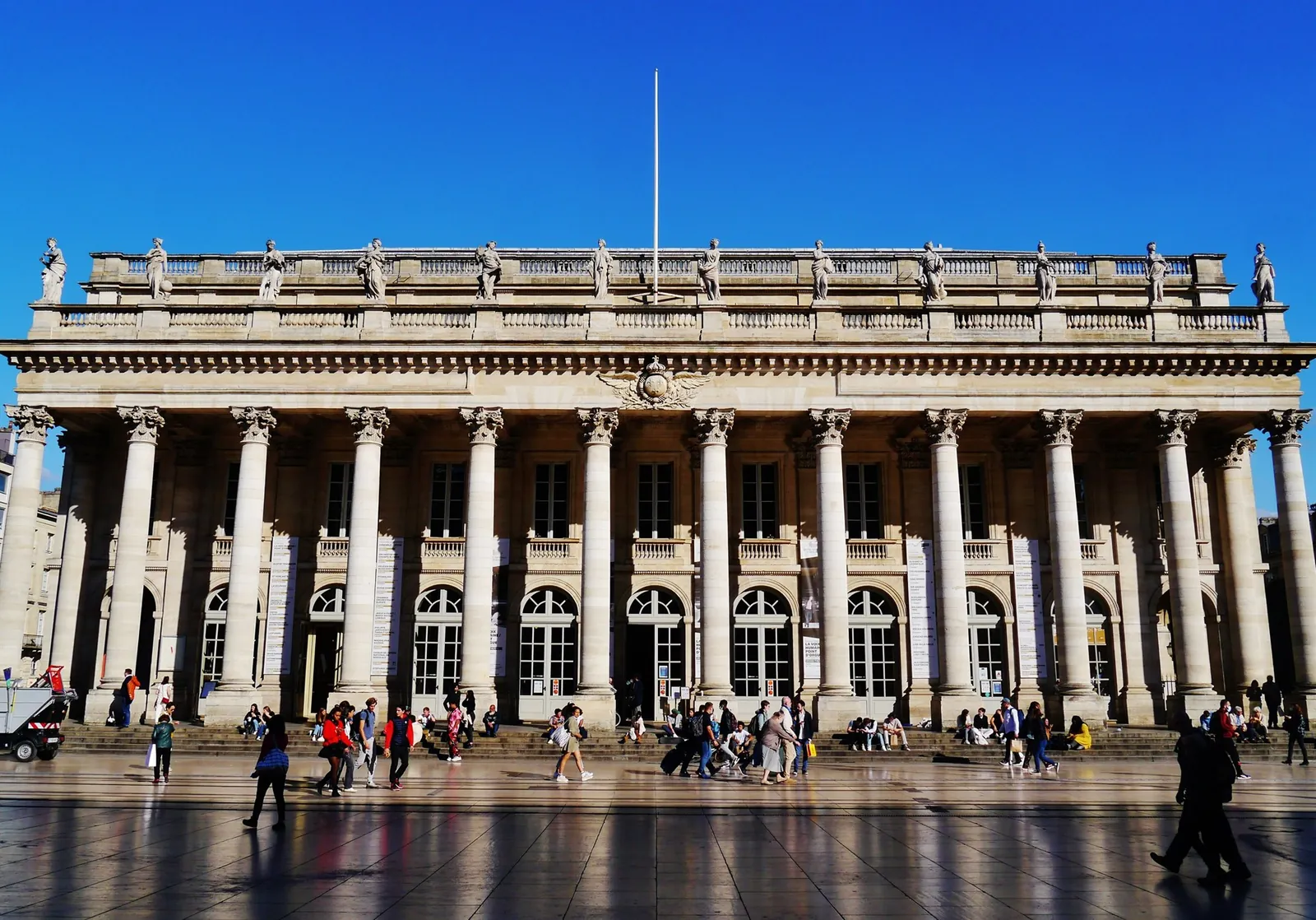
Bordeaux rewards retirees who want a walkable, architecturally grand French city without Paris prices. The pedestrianized golden triangle around Place de la Bourse and the Grand Théâtre, the antique-lined Chartrons quarter, and the medieval lanes of Saint-Pierre each offer a distinct pace of life. A modern tram network glides across the largely car-free center, the Marché des Capucins supplies oysters and produce six mornings a week, and the riverside miroir d'eau reflecting pool has become the city's outdoor living room.
Non-EU retirees apply for France's long-stay visitor visa (visa de long séjour visiteur), which requires proof of sufficient financial means (typically €1,500-€2,000 per month minimum) and private health insurance; EU citizens settle freely. Bordeaux's TGV reaches Paris Montparnasse in about two hours and ten minutes, and Mérignac airport offers direct flights across Europe and to North Africa, making the city well connected without the crowds of the capital or the Riviera.
What does it really look like in Bordeaux?
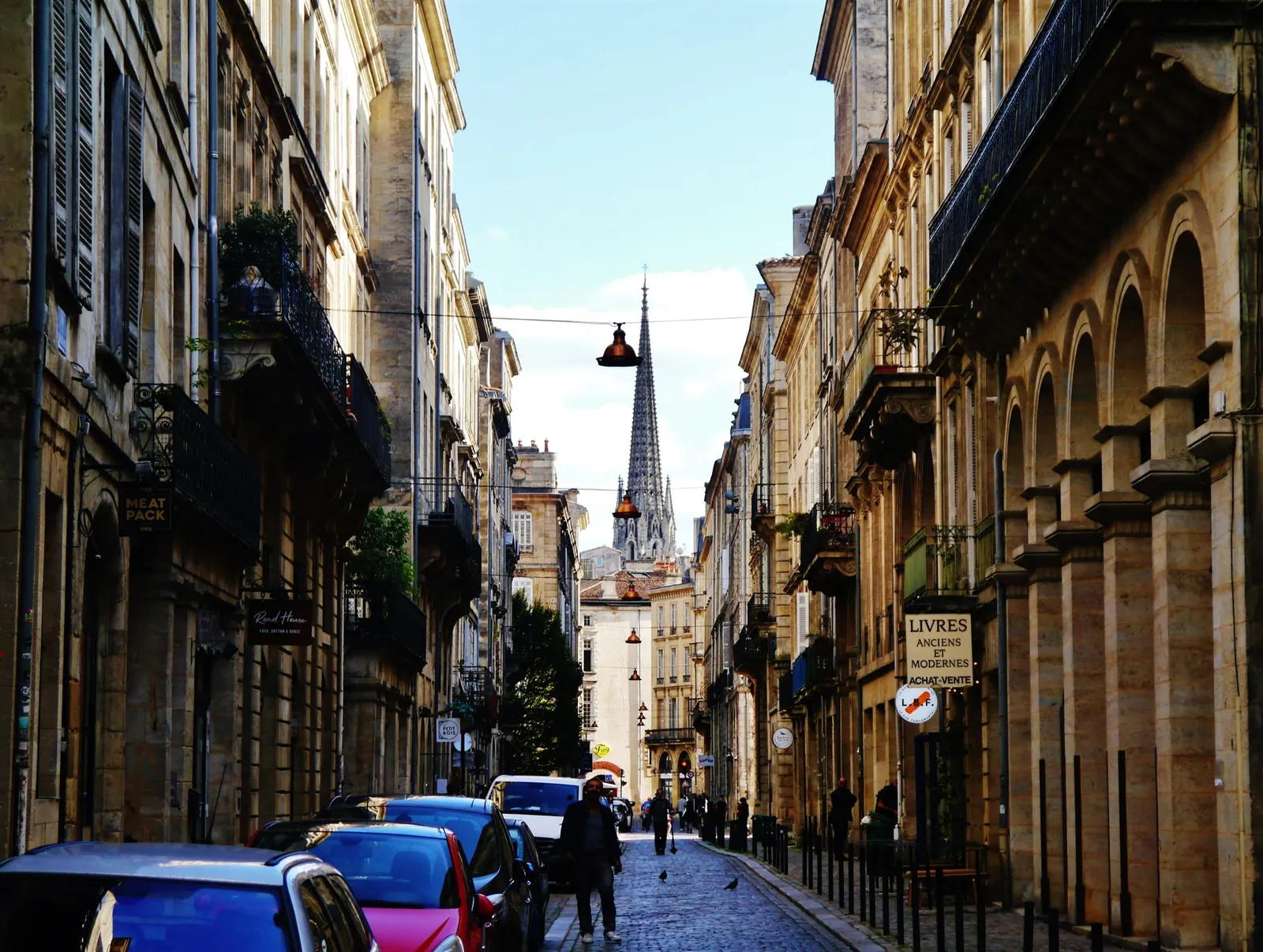
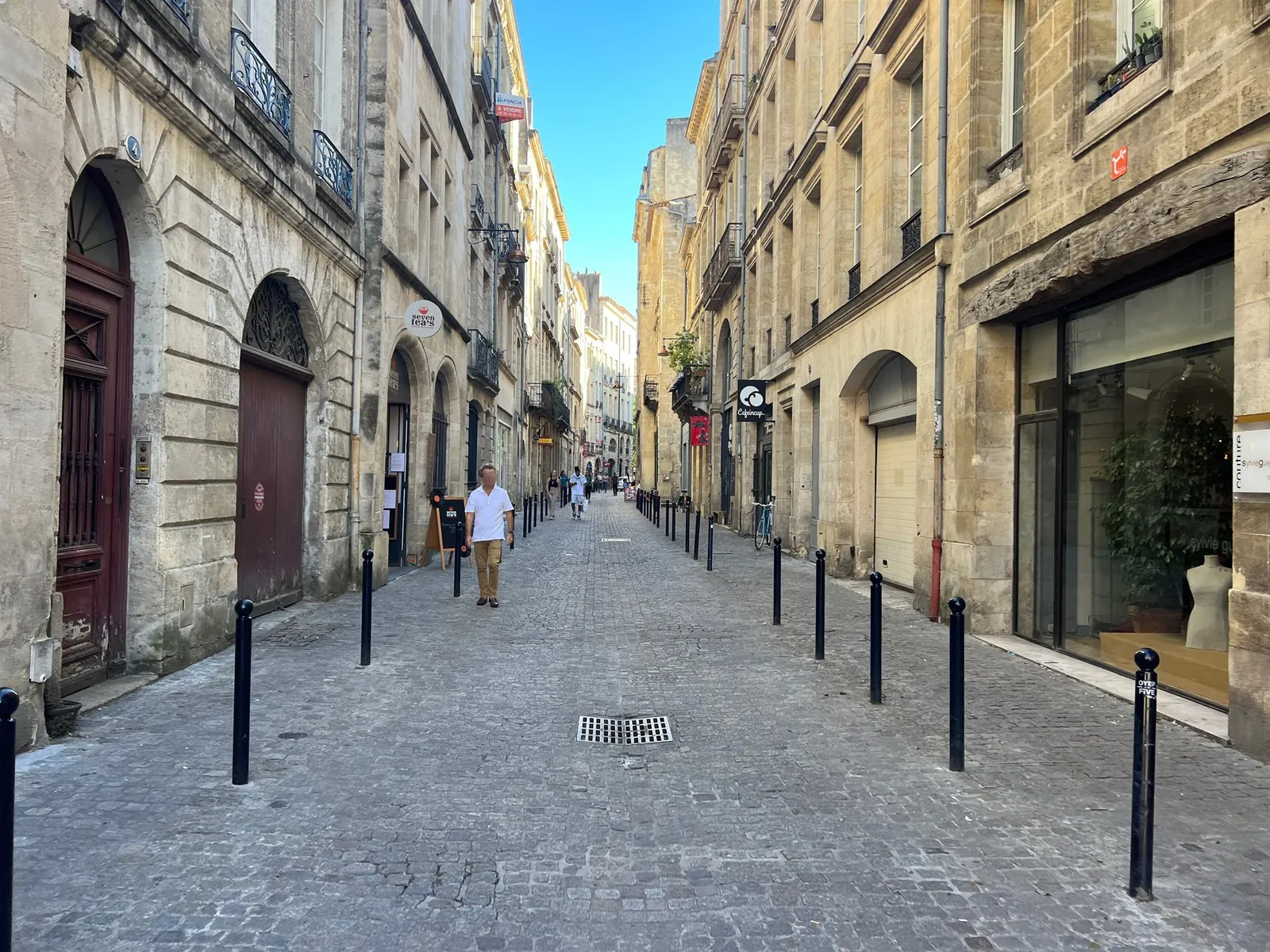
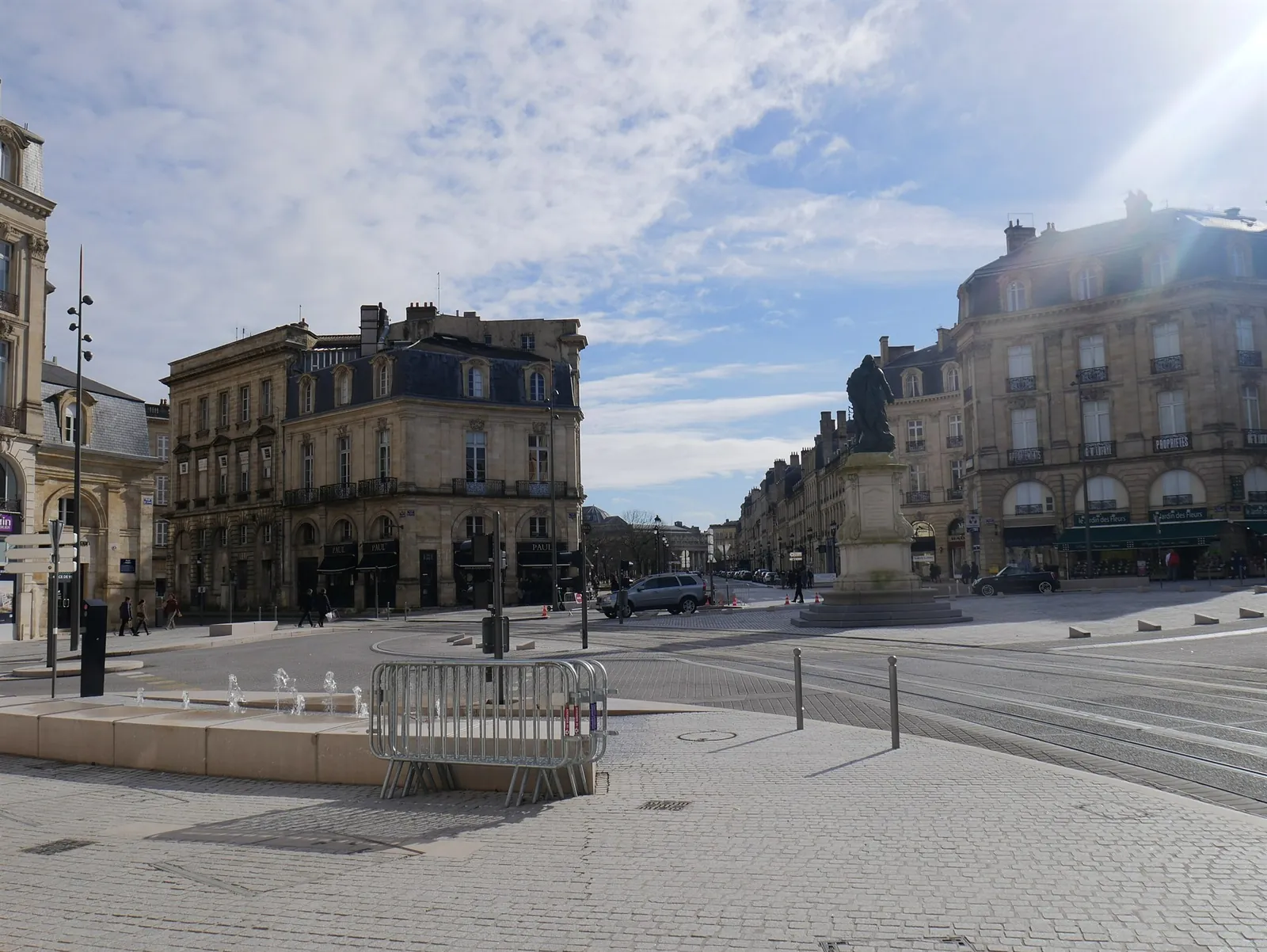
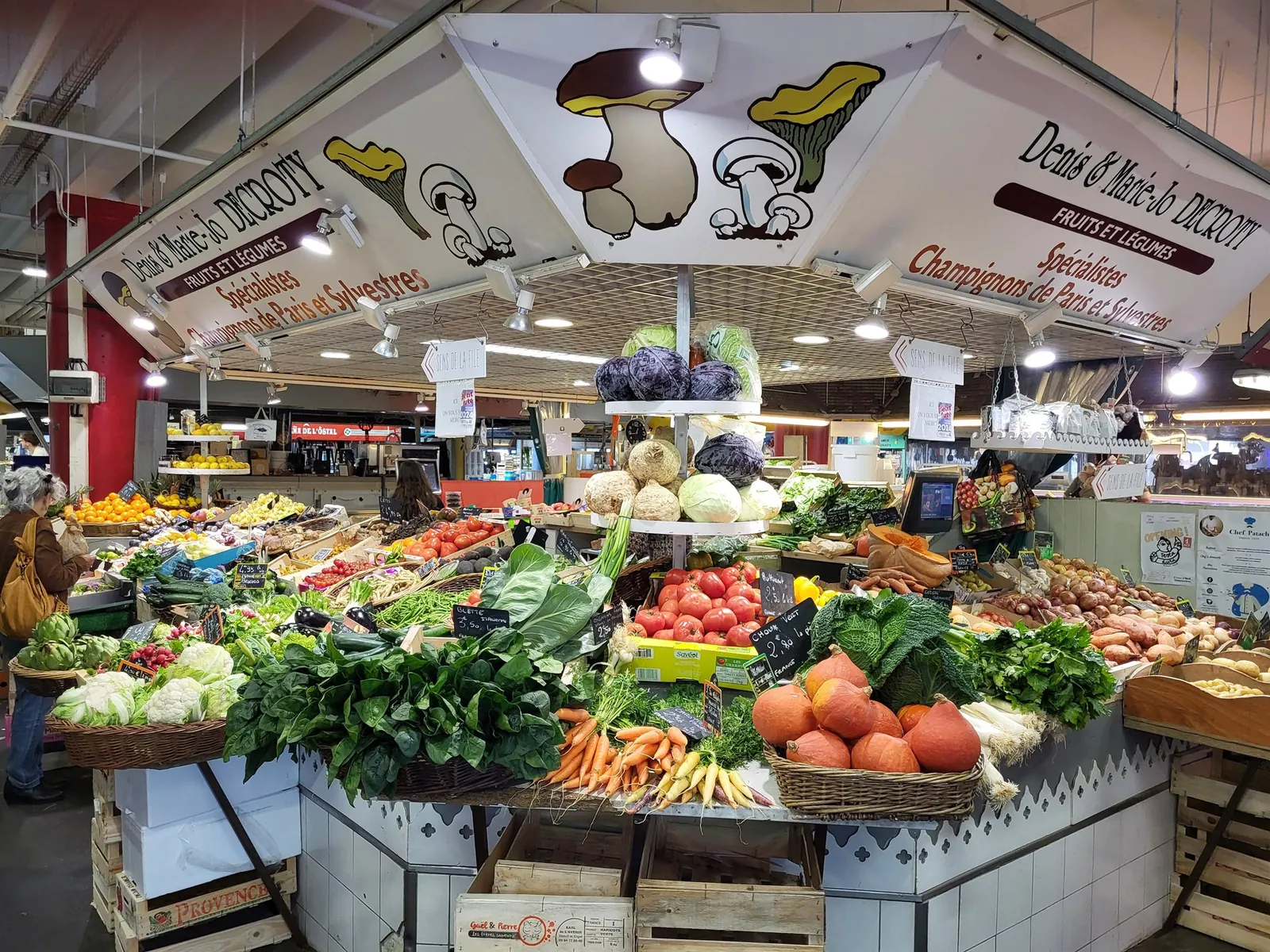
Authentic, unedited photos of Bordeaux by residents and visitors, taken on ordinary days rather than chosen by a tourist board. Each one shows when it was taken. Browse photos of 105 cities →

_-_2022-09-10_-_1.jpg)

.jpg)

.jpg)

.jpg)




.jpg)
The other side

.jpg)
What does it cost to live in Bordeaux?
1-Bedroom Rent
$750-$1,300/month
Local Restaurant Meal
$14-$22 at local restaurants
Cup of Coffee
$2-$4
Estimated Monthly Total
$2,000-$3,200
Want a personalized estimate? Use our cost of living calculator
How good is healthcare in Bordeaux?
France's healthcare system ranks among the best in the world, and Bordeaux is served by one of the country's largest university hospital groups. CHU de Bordeaux operates the Groupe hospitalier Pellegrin (its main emergency and trauma center), Hôpital Haut-Lévêque in Pessac (a national reference for cardiology and thoracic care), and the centrally located Hôpital Saint-André. Legal residents enroll in France's Assurance Maladie, which reimburses roughly 70% of medical costs, and most add a mutuelle (supplementary insurance) at $80-$200/month to cover the remainder. GP consultations cost $25-$50. Private clinics such as the Clinique Bordeaux Nord Aquitaine offer shorter waits for elective care, and English-speaking doctors are reachable through international patient services.
What is daily life like in Bordeaux?
Bordeaux blends the culture of a major city with an easy, wine-country rhythm. Mornings begin at the Marché des Capucins over oysters and a glass of white; afternoons drift through the Musée d'Aquitaine, the CAPC contemporary art museum, or the immersive Cité du Vin. Retirees cycle the flat riverside paths, take the tram to the Jardin Public, and spend weekends touring the châteaux around Saint-Émilion (40 minutes) or the Atlantic beaches and dunes of Arcachon Bay (about an hour by train). The pace is unhurried, the streets are walkable, and a car is optional thanks to the tram and regional rail.
What is the climate like in Bordeaux?
Bordeaux has a temperate oceanic climate, milder and wetter than the Mediterranean coast. Summers (June-September) are warm at 25-30°C with occasional heat spikes, while winters (December-February) are cool and damp at 5-11°C, only briefly touching frost. Rainfall is spread across the year (about 950 mm annually), keeping the surrounding vineyards and the city's parks green. Spring and autumn are long and pleasant, and snow is rare. The maritime influence from the nearby Atlantic keeps extremes in check, and air conditioning is needed only during short summer heat waves.
What are the pros and cons of retiring in Bordeaux?
Pros
- World-class French healthcare with a major CHU university hospital group
- Grand UNESCO-listed architecture and a walkable, tram-served, largely car-free center
- Notably cheaper than Paris or Nice while still a full-service major city
- TGV to Paris in about 2h10 and an international airport at Mérignac
- Surrounded by the world's most famous vineyards and an hour from Atlantic beaches
Cons
- Grey, damp winters with more rain than the Mediterranean south
- Housing costs have risen sharply since the high-speed rail line opened in 2017
- French bureaucracy can be slow for visa and residency processes
- French proficiency is important for daily life and integration
Who should retire in Bordeaux?
Retirees who want a grand, walkable French city with top-tier healthcare and wine-country living at a lower cost than Paris or the Riviera, and who don't mind trading Mediterranean sun for a mild, greener oceanic climate.
Which neighborhoods suit retirees in Bordeaux?
Chartrons
Former wine-merchant district north of the center, now known for antique shops, the Sunday quayside market, and boutique cafés. One-bedroom rents range $850-$1,350/month. Elegant and walkable, popular with retirees who want character close to the river.
Saint-Pierre (Old Town)
The medieval heart around Place du Parlement, full of pedestrian lanes, restaurants, and squares. One-bedrooms rent for $900-$1,400/month. Lively and central, best for those who want to be in the cultural core.
Caudéran
Leafy, residential, well-to-do quarter west of the center with houses, gardens, and quiet streets. One-bedrooms rent for $750-$1,150/month. Calm and green, favored by retirees seeking space away from the tourist crowds.
Which hospitals serve retirees in Bordeaux?
CHU de Bordeaux, Groupe hospitalier Pellegrin
The main public university hospital and regional trauma center, with comprehensive specialist care including neurosurgery, oncology, and emergency medicine. Teaching hospital affiliated with the Universite de Bordeaux.
Hopital Haut-Leveque (CHU, Pessac)
CHU campus in suburban Pessac and a national reference for cardiology, cardiac surgery, and thoracic medicine, as well as hematology and transplantation.
Clinique Bordeaux Nord Aquitaine
Large private multi-specialty clinic offering surgery, cardiology, and diagnostic imaging, generally with shorter waits than public hospitals for elective procedures. Accepts Securite Sociale and mutuelle coverage.
Facility details may change. Verify accreditation status and services directly with each hospital before making healthcare decisions.
What is the food scene like in Bordeaux?
Bordeaux's table is built on southwest France and the sea. Canelés (small fluted cakes with a caramelized crust and custard center) are the city's signature, sold for $1-$2 apiece at bakeries like Baillardran. Arcachon Bay oysters, often served with a hot crépinette sausage, appear on menus and market stalls for $12-$18 a dozen, and entrecôte à la bordelaise (steak in a red-wine and shallot sauce) is the classic bistro plate at $18-$28.
The Marché des Capucins, the city's belly, runs six mornings a week with oyster bars, cheese, produce, and prepared foods; a weekend oyster-and-white-wine breakfast there is a Bordeaux ritual. Bistros around Saint-Pierre and the Chartrons serve regional cooking for $20-$35 per person, while the city holds several Michelin-starred rooms, led by La Grande Maison, for special occasions. Weekly groceries for two at a Carrefour or the covered markets run $75-$110.
Wine is, unavoidably, everywhere and affordable at the source: very good Bordeaux from nearby châteaux starts at $8-$15 a bottle at local cavistes, and the Cité du Vin and countless bars à vin make tasting an everyday pleasure rather than a splurge. For retirees who love food and wine, few cities in Europe offer more for the money.
Is retiring in Bordeaux right for you?
Take our free 3-minute retirement quiz to see how life in Bordeaux, France, compares to other destinations based on your preferences, budget, and needs.
Take the Retirement QuizFrequently Asked Questions About Retiring in Bordeaux
What visa do non-EU retirees need for Bordeaux?
Non-EU retirees typically apply for a Visa de Long Séjour Visiteur (long-stay visitor visa), valid for one year and renewable. You must show sufficient financial resources (typically $1,800-$2,500/month minimum), private health insurance, and proof of accommodation. After five years of continuous legal residency you can apply for a permanent residency card.
Is Bordeaux cheaper than Paris or Nice for retirement?
Yes. A comfortable retirement in Bordeaux costs about $2,000-$3,200/month, versus $3,000-$4,000+ in Paris and $2,500-$3,800 on the Côte d'Azur. A one-bedroom apartment runs $750-$1,300/month depending on the neighborhood. Prices have risen since the high-speed rail link to Paris opened, but Bordeaux remains one of the better values among France's major cities.
Do I need a car to retire in Bordeaux?
Not in the city. Bordeaux has a modern four-line tram network, an extensive bus system, and a largely car-free, walkable center, so many retirees live comfortably without a car. A car helps for exploring the vineyards and Atlantic coast, but regional TER trains reach Saint-Émilion, Arcachon, and the beaches directly.
Sources & References
- Numbeo, Cost of living index and price data for Bordeaux: rent, groceries, restaurants, and transportation
- CHU de Bordeaux, Facility services, specialist departments, and healthcare capabilities across the Pellegrin, Haut-Leveque, and Saint-Andre sites
- French Office for Immigration and Integration (OFII), Long-stay visa and residence permit procedures applicable to Bordeaux residents
- WHO France Country Profile, National health system indicators and healthcare quality benchmarks