
Retirement Guide
Retire in Cambodia
Last updated: October 2026
Cambodia offers the most affordable retirement in Southeast Asia combined with one of the easiest visa processes. The country's low bureaucratic hurdles, US dollar-based economy, and genuine friendliness make it appealing for budget-conscious retirees who want a simple, relaxed lifestyle. While infrastructure and healthcare lag behind Thailand and Malaysia, Cambodia's rapid development and rock-bottom costs attract a growing community of international retirees.
Quick Stats
Why Retire in Cambodia?
- 1
Ultra-affordable living: Cambodia has the lowest cost of living among popular SE Asian retirement destinations, with comfortable retirement possible on $800-1,200/month.
- 2
Easiest visa in SE Asia: the Retirement Visa (ER) is simple to obtain and renewable annually, with minimal financial requirements.
- 3
US dollar economy: the USD is widely accepted everywhere, eliminating currency exchange hassles and providing financial familiarity.
- 4
Relaxed pace of life: Cambodia offers a genuine slow-living experience without the commercialization of more developed tourist destinations.
- 5
Friendly, welcoming people: Cambodians are known for their warm hospitality and genuine kindness toward foreigners.
Cost of Living Breakdown in Cambodia
Here is a detailed breakdown of monthly costs for a retiree in Cambodia. All figures are in USD.
| Category | Item | Low | High | Notes |
|---|---|---|---|---|
| Housing | One-bedroom apartment (city center) | $200 | $500 | Phnom Penh; Siem Reap even cheaper |
| Housing | One-bedroom apartment (outside center) | $120 | $300 | Local neighborhoods |
| Food | Local restaurant meal | $1 | $3 | Street food $0.50-1.50 |
| Food | Monthly groceries | $80 | $180 | Local markets very cheap |
| Healthcare | Doctor visit (private clinic) | $10 | $30 | International clinics in PP |
| Healthcare | Health insurance (annual, age 60-70) | $800 | $2,500 | International plans recommended |
| Transport | Monthly transport | $20 | $80 | Tuk-tuks and Grab rides |
| Utilities | Monthly utilities | $30 | $80 | Electricity, water, internet |
| Entertainment | Monthly entertainment | $50 | $200 | Dining, activities, travel |
Read our full guide: Detailed Cost of Living in Cambodia
Visa and Residency Requirements for Cambodia
Retirement Visa (ER) / Long-Stay Business Visa
Duration: 1 year, renewable indefinitely
Cost: $35 visa on arrival + $280-350/year for ER extension via agent
Requirements:
- Valid passport with 6+ months remaining
- Ordinary visa (E-class) obtainable on arrival for $35
- ER extension through local agent: minimal financial documentation required
- No minimum age requirement for business visa; ER typically 55+
- No minimum income or savings requirements (unlike most SE Asian countries)
Read our full guide: Complete Cambodia Retirement Visa Guide
Healthcare and Medical Services in Cambodia
Healthcare is Cambodia's biggest weakness. Phnom Penh has several adequate international clinics (Royal Phnom Penh Hospital, Sen Sok International) for routine care. However, for anything serious, most expats travel to Bangkok (1-hour flight) or Singapore. Siem Reap has basic facilities. International health insurance with medical evacuation to Bangkok is essential for anyone retiring in Cambodia.
Read our full guide: Healthcare in Cambodia for Expat Retirees
Best Cities for Retirees in Cambodia
See all cities: Best Cities to Retire in Cambodia
What Cambodia actually looks like
Authentic, unedited photos from the retirement cities in Cambodia, each dated, including the downsides. Click a photo to open that city's gallery.
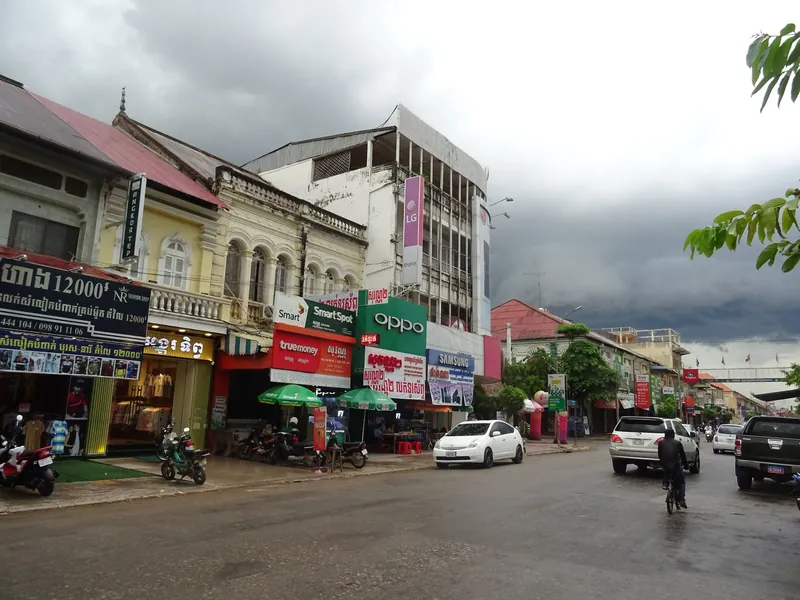
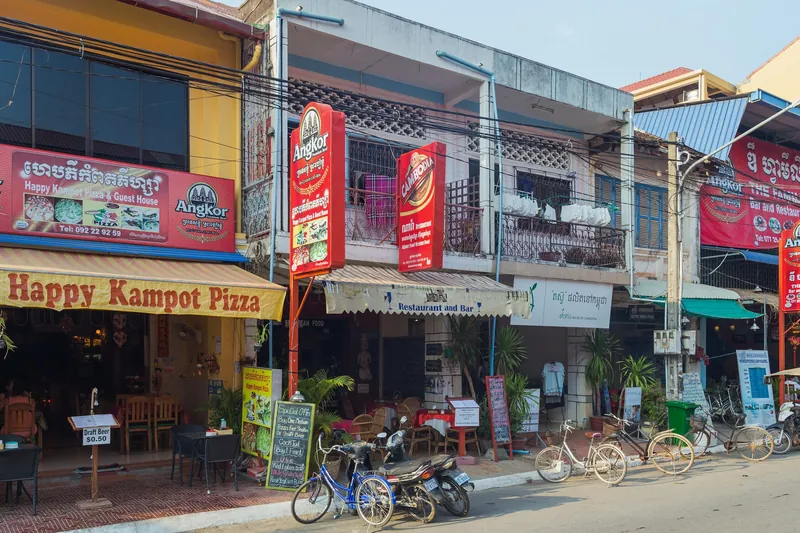
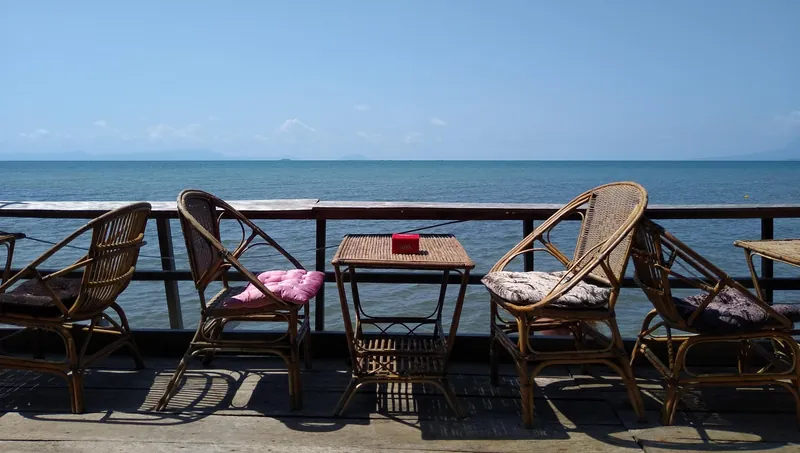
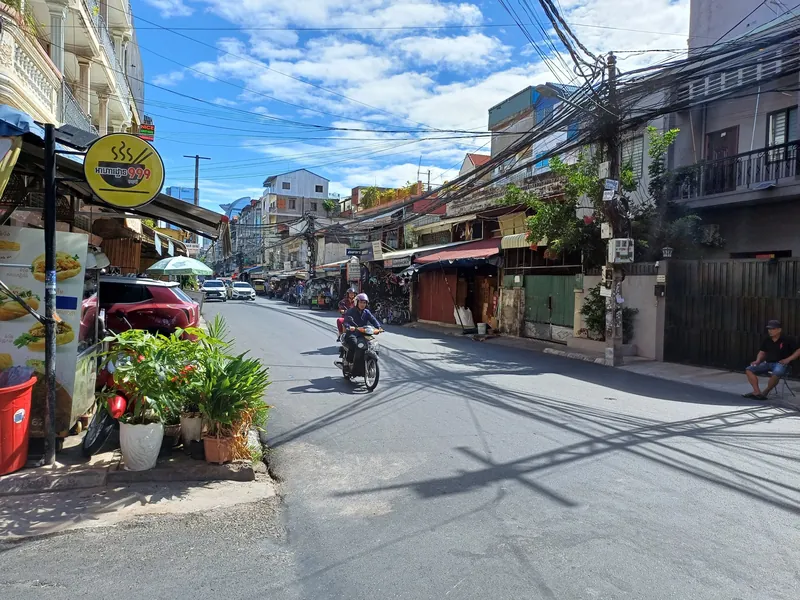
Assisted Living and Care Options in Cambodia
Cambodia's formal elder care infrastructure is very limited. There are no international-standard assisted living facilities specifically for foreign retirees. However, home care is extremely affordable: full-time caregivers cost $200-400/month. Many retirees with care needs use Cambodia as a base while relying on Bangkok for medical care (1-hour flight from Phnom Penh). The low cost allows for a very comfortable home care setup.
Pros and Cons of Retiring in Cambodia
Pros
- Lowest cost of living in popular SE Asian destinations
- Easiest visa process with minimal requirements
- US dollar widely accepted: no currency exchange headaches
- Relaxed, genuine lifestyle without over-commercialization
- Friendly, warm local people
- Affordable full-time home care ($200-400/month)
Cons
- Healthcare is the weakest in SE Asia: medical evacuation to Bangkok essential for anything serious
- Widespread scams targeting foreigners: property scams, romance scams, and online fraud are common
- Political instability and limited rule of law: corruption affects daily life and business
- Infrastructure is underdeveloped: unreliable electricity, poor roads, slow internet outside Phnom Penh
- Extreme heat year-round (30-38°C) with no cool season: dangerous for seniors with heart conditions
- Food hygiene standards are low: gastrointestinal illness is very common and risky for elderly
- Limited international-standard care facilities: no assisted living for foreigners
- Monsoon flooding affects low-lying areas (Jun-Oct), especially around Tonle Sap
- Personal safety concerns: bag snatching, petty theft, and occasional violent crime in cities
Is Cambodia Right for You?
Take our free 3-minute retirement quiz to see how Cambodia compares to other destinations based on your personal preferences, budget, and needs.
Take the Retirement QuizFrequently Asked Questions About Retiring in Cambodia
How much does it cost to retire in Cambodia?
Cambodia is the cheapest popular retirement destination in SE Asia. A comfortable lifestyle costs $800-1,200/month in Phnom Penh and $600-1,000/month in Siem Reap. This includes a nice apartment ($200-400), food ($100-200), and all other expenses. Some frugal retirees manage on $500-600/month.
Is Cambodia safe for retirees?
Generally safe. Violent crime against foreigners is uncommon. Petty crime (bag snatching, phone theft) can occur, particularly in Phnom Penh. Common precautions include being aware of surroundings, not displaying expensive items, and using tuk-tuks or Grab at night. Most retirees report feeling safe in their daily lives.
Why do retirees use US dollars in Cambodia?
The US dollar has been widely used in Cambodia since the 1990s. Most businesses accept USD, ATMs dispense dollars, and rent/major purchases are typically in dollars. Small change is given in Cambodian Riel. This is very convenient for American retirees and simplifies financial planning for all Western retirees.
How do I get healthcare in Cambodia?
For routine care, international clinics in Phnom Penh are adequate and affordable ($10-30 per visit). For anything serious, most expats fly to Bangkok, a 1-hour, $50-100 flight from Phnom Penh. International health insurance with medical evacuation coverage is essential. Budget $800-2,500/year for comprehensive insurance.
What is the retirement visa process?
Cambodia has one of the easiest visa processes in SE Asia. Arrive on an ordinary visa ($35 on arrival), then extend to a 1-year ER (retirement) visa through a local agent for $280-350. Renewal is straightforward annually. Unlike Thailand or Malaysia, there are no minimum savings or income requirements.
Explore More About Cambodia
Sources & References
- General Department of Immigration Cambodia, Visa-on-arrival requirements, long-stay extension procedures, and residence regulations
- WHO Cambodia Country Profile, Health system capacity, healthcare workforce, and population health indicators
- Numbeo, Cost of living index and price comparisons for Phnom Penh and Siem Reap
- National Bank of Cambodia, Economic statistics, dollarization data, and financial system overview
Key Takeaways: Retiring in Cambodia
- Best for: Budget-conscious retirees who want maximum affordability, easy visa, and a genuine slow-living experience.
- Monthly budget: $600-1,500 covers a comfortable lifestyle, the cheapest in SE Asia.
- Visa: Easiest in SE Asia: no age, income, or savings requirements. ~$300/year total.
- Healthcare: Weakest point: adequate for routine care in Phnom Penh, but Bangkok evacuation essential for serious issues.
- Top city: Phnom Penh for best infrastructure; Siem Reap for ultra-relaxed living; Kampot for off-the-beaten-path.
- Dollar economy: USD widely accepted: no currency exchange hassles.
- Watch out for: Limited healthcare, less developed infrastructure, and hot climate year-round.